
Technology
Erik Hosler on How AI-Driven Chip Innovation Is Powering the Brains of Self-Driving Vehicles

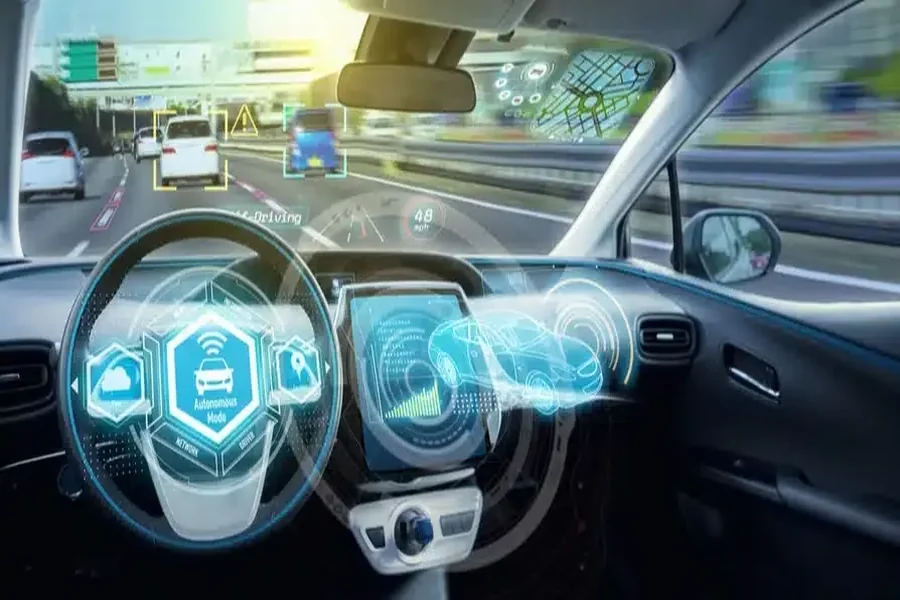
Autonomous vehicles demand processors that can handle immense amounts of data in real time, interpreting sensor inputs, predicting road conditions, and making split-second driving decisions. Standard chips are not built for these workloads, which require low latency, high reliability, and optimized energy efficiency. The answer lies in custom chips tailored specifically for self-driving systems, and artificial intelligence is now at the center of their development. Erik Hosler, a semiconductor innovation expert, highlights how machine learning tools are accelerating the creation of processors that meet the unique demands of autonomous mobility.
This innovation comes at a crucial moment. Automakers and technology companies are racing to deliver vehicles capable of safe, fully automated navigation. However, the computational requirements are staggering, such as multiple sensors feeding continuous streams of data, algorithms must fuse and interpret inputs instantly, and every decision carries life-or-death consequences. Traditional design methods cannot keep pace with these demands. Still, AI-driven chip design tools are shortening timelines, optimizing architectures, and ensuring that the processors inside self-driving cars are as advanced as the algorithms they support.
Why Self-Driving Demands Custom Chips
Unlike consumer electronics, where general-purpose processors can handle a variety of tasks, autonomous driving requires chips optimized for specific functions. LiDAR, radar, cameras, and ultrasonic sensors generate terabytes of data every hour. To avoid dangerous delays, these streams must be processed locally without relying on distant cloud servers.
Custom chips address these requirements by providing domain-specific acceleration for tasks such as image recognition, path planning, and sensor fusion. As onboard power is limited, they must balance raw performance with energy efficiency. Most importantly, they must be designed with redundancy and fail-safe features to ensure reliability in unpredictable driving environments.
AI as a Co-Designer
Artificial intelligence has become an indispensable partner in developing these custom chips. Traditional design cycles involve months of manual optimization, evaluating layouts, routing interconnects, and balancing power distribution. AI-driven tools can simulate thousands of design variations in a fraction of the time, rapidly identifying the configurations that best meet performance and safety requirements.
Reinforcement learning models learn iteratively, improving with each simulation run, while generative design algorithms propose entirely new architectures optimized for autonomous workloads. This adaptive process allows engineers to explore broader design spaces and arrive at solutions that might have been overlooked by human intuition alone.
Optimizing for Safety and Reliability
Safety is paramount in autonomous driving. AI-optimized chips are being designed to minimize latency in critical decision-making pathways, ensuring that vehicles can react within milliseconds to unexpected hazards.
AI also supports fault-tolerant architectures. By predicting potential failure points, machine learning models help engineers build redundancy into designs, ensuring that a single chip malfunction does not compromise system safety. These insights extend to thermal management as well, where AI simulations forecast how heat distribution might impact reliability over long driving periods. The result is hardware that not only performs efficiently but is also hardened for real-world challenges.
Energy Efficiency on the Road
Autonomous vehicles require robust computation, but energy efficiency remains a pressing concern. Excessive power consumption reduces driving range, an especially critical factor in electric vehicles. AI helps address this trade-off by optimizing chips for maximum performance per watt.
Through simulation and predictive modeling, AI identifies how workloads can be distributed across processing units to conserve energy without sacrificing responsiveness. It ensures that vehicles can run advanced AI models continuously while still maintaining practical efficiency for daily use.
From Lab to Road: Accelerating Deployment
Developing a chip is only half the battle, but bringing it into mass production is equally challenging. AI tools assist here as well, modeling how new chip designs will interact with manufacturing processes. By predicting yield outcomes and identifying potential bottlenecks, AI ensures smoother transitions from prototypes to large-scale fabrication.
This acceleration is vital for the automotive industry, where time-to-market can determine competitive advantages. Faster design and production cycles mean automakers can update and improve vehicle processors on shorter timelines, keeping pace with rapidly developing AI driving models.
Intelligence Behind the Wheel
The real advantage of AI-driven chip development lies in tailoring processors to the specific demands of autonomous driving. Chips designed with machine learning assistance can allocate resources dynamically, prioritizing life-critical tasks while efficiently managing secondary functions.
For example, a custom accelerator may prioritize object detection from camera feeds during highway driving while shifting resources to radar processing in low-visibility conditions. These adaptive capabilities make self-driving systems not just faster, but smarter, adjusting hardware behavior to the unique challenges of each driving environment.
Precision in Automotive Innovation
The broader push toward AI in chip design reflects that semiconductor development is becoming more data-driven, predictive, and precise. Erik Hosler notes, “The ability to detect and measure nanoscale defects with such precision will reshape semiconductor manufacturing.” Though his insight centers on manufacturing quality, its relevance extends to autonomous systems.
Precision is the cornerstone of both safe driving and reliable chip design. AI brings this precision to every stage of development, ensuring that the processors steering autonomous vehicles are dependable under the most demanding conditions. This perspective underscores the point that AI is not just enabling smarter chips but also enabling trust in the technology itself, which is a critical factor for public acceptance of autonomous vehicles.
Roadblocks to Adoption
Despite these advances, challenges remain. Developing AI-optimized custom chips requires substantial investment in both computational resources and skilled personnel. Integrating these designs into vehicles also involves meeting rigorous safety certifications, which can slow deployment.
There is also the challenge of interoperability. Autonomous vehicles are complex ecosystems where processors must communicate seamlessly with sensors, actuators, and cloud services. AI-driven design helps anticipate integration challenges, but ensuring compatibility across diverse hardware and software platforms remains difficult.
Finally, trust and transparency are vital. Automakers and regulators must understand how AI-made design choices impact safety, which requires explainable models and rigorous testing before chips can be deployed on public roads.
Driving Toward the Future
AI’s role in custom chip development is redefining the trajectory of autonomous vehicles. By accelerating design, optimizing safety, and improving efficiency, AI ensures that processors keep pace with the immense demands of self-driving systems.
As the race toward autonomy intensifies, companies that embrace AI-driven chip development will not only deliver more reliable vehicles but also build trust in their technology. The processors inside tomorrow’s self-driving cars will be as innovative as the AI they support, designed by algorithms, tested by simulations, and proven on the road. With AI as a co-designer, the future of mobility is being built chip by chip.

Crack The Code: Turning Casual Gaming Into Big Wins

Medical PCB Assembly: Precision Manufacturing for Life-Critical Electronics

Body Lotion For Oily Skin: How To Choose The Right One

Erik Hosler on How AI-Driven Chip Innovation Is Powering the Brains of Self-Driving Vehicles

From Runway To Real Life: Styling The Dramatic Hemline Top

The Hidden Challenges of Live Translation in Noisy Event Environments

Moving Long-Distance with Kids or Pets: Stress-Free Tips for Families

Turkey Real Estate With Residency And Citizenship Benefits

Inverter PCB: Design, Functions & Importance in Power Electronics

A Man’s Guide to Successful Hair Transplant in Turkey

Iman Esmail ( Dancer ) wiki, bio, facts, family, age, and more

NCR Days (Web Series) Cast, Wiki, Storyline, and more.

Surthy Cooks ( Influencer ) wiki, age, family, net worth, and more

Anushka Kaushik (Actress) – Age, Wiki, Weight, Career and More.

Saloni Sanu (Kumar Sanu’s wife), age, family, facts and more

Crushed (Web Series) details, facts, releasing date, cast, and more

Ambrish Verma (actor) age, height, weight, career, girlfriend, facts, and more

Caroline Brossard (Harish Salve’s wife) – age, facts and much more

Trust Issues (Amazon Mini Tv) wiki, cast, release date, and more
